
How Startups Are Redefining Product Innovation
The artificial intelligence landscape is shifting. After the initial excitement around generative AI tools like ChatGPT, a new phase is taking shape. Startups are moving beyond simple chatbots and text generators to build products that integrate AI as a core component rather than a novelty feature.
From Experimentation to Integration
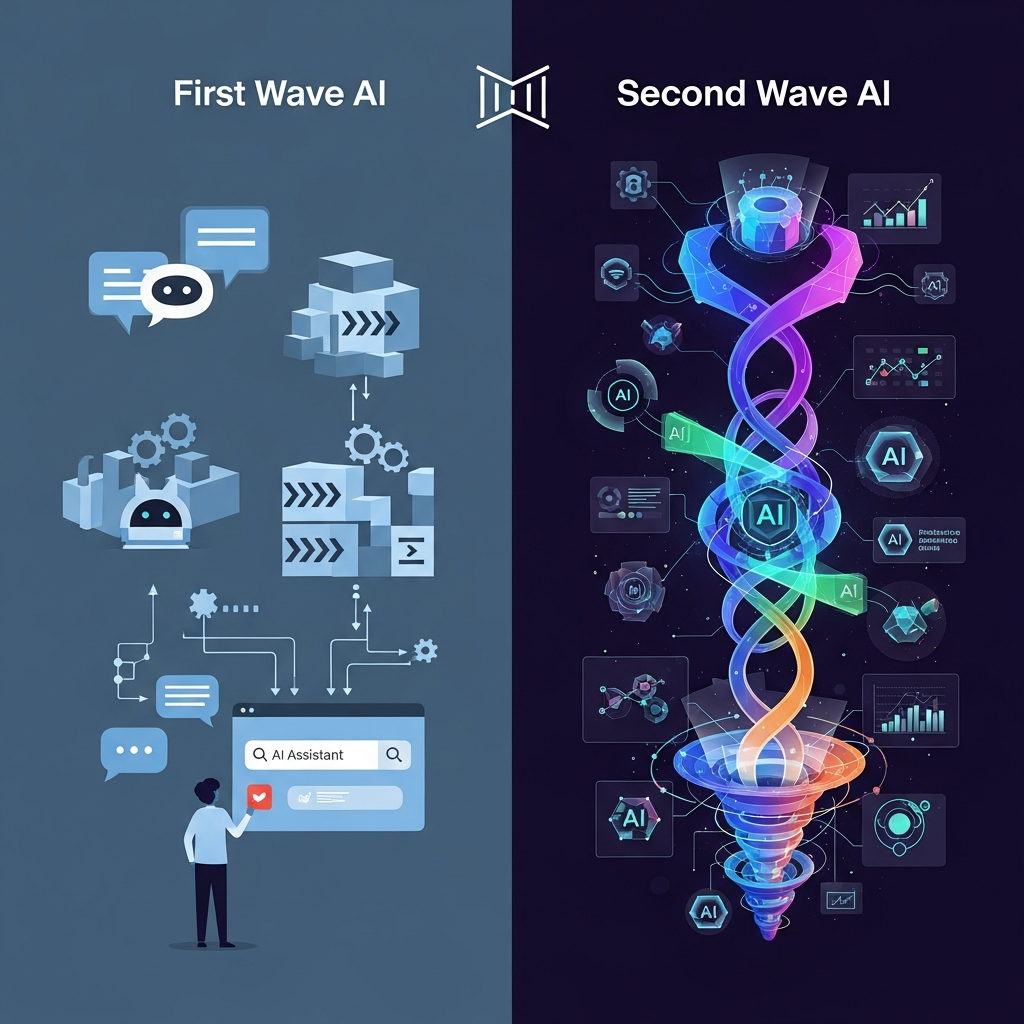
The first wave of AI adoption saw companies rushing to add conversational interfaces and generative capabilities to existing products. This resulted in a flood of AI wrappers and tools that often felt disconnected from actual user needs. The second wave represents a maturation of the technology, where startups are designing products with AI capabilities woven into their fundamental architecture.
This shift reflects a deeper understanding of what AI can accomplish. Rather than treating machine learning as an add-on feature, product teams are rethinking entire workflows and user experiences around what these systems can enable.
Building AI-Native Products
Several startups are leading this transition by creating products that couldn’t exist without AI at their core. These companies aren’t simply adding automation to existing processes—they’re reimagining what’s possible.
The distinction matters for several reasons:
- AI-native products can handle complexity that traditional software cannot manage
- They adapt to user behavior and context in real-time
- The user experience is built around what AI does well, rather than forcing AI into conventional interfaces
- Data flows and model training are part of the product roadmap from day one
Investment Patterns Are Changing
Venture capital firms are adjusting their evaluation criteria for AI startups. The focus has shifted from “does it use AI?” to “does it solve a real problem in a way that only AI can?” This change in perspective is separating sustainable businesses from temporary solutions built on hype.
Investors are looking for startups that demonstrate clear unit economics and defensibility. The ability to fine-tune models, accumulate proprietary data, and create feedback loops that improve the product over time has become a key differentiator.
Technical Challenges Remain
Despite the progress, startups face significant obstacles in building second-wave AI products. Infrastructure costs continue to strain budgets, particularly for companies serving high-volume use cases. Model performance can be inconsistent, and managing customer expectations around AI reliability requires careful product design.
Regulatory uncertainty also looms large. As governments develop frameworks for AI governance, startups must build flexible systems that can adapt to changing compliance requirements without complete rebuilds.
Industry-Specific Applications
The second wave is particularly visible in vertical applications. Healthcare, legal services, and financial technology are seeing startups that use AI to handle domain-specific tasks with increasing sophistication.
In healthcare, AI is being used to analyze medical imaging, predict patient outcomes, and streamline administrative workflows. Legal tech startups are building tools that can review contracts, conduct discovery, and research case law with context awareness that goes beyond simple keyword matching.
Financial services companies are deploying AI for fraud detection, risk assessment, and personalized financial planning. These applications require deep integration with existing systems and careful attention to accuracy and compliance.
The Developer Experience Factor
Many second-wave startups are focusing on improving the developer experience around AI. They’re building tools that make it easier for engineering teams to implement, monitor, and maintain AI systems without requiring specialized machine learning expertise.
This democratization of AI development is expanding the market beyond companies with large research teams. Smaller startups can now build sophisticated AI features by leveraging platforms that handle the infrastructure complexity.
What Comes Next
The evolution from first to second wave suggests that AI technology is following a familiar pattern in software development. Initial excitement gives way to practical application, and the market rewards solutions that deliver consistent value rather than technical novelty.
For startups entering the space now, the bar is higher. Products need to demonstrate clear ROI, reliable performance, and sustainable competitive advantages. The companies that succeed will be those that understand both the capabilities and limitations of AI, designing products that amplify what humans do well while automating tasks that machines can handle more efficiently.
The second wave of AI innovation is less about the technology itself and more about how it gets applied. Startups that recognize this shift and build accordingly are positioning themselves for long-term success in an increasingly competitive market.
Analyzed and outlined by Claude Sonnet 4.5, images by Gemini Imagen 4, automated with Make.com.
**Source**
https://www.businessinsider.com/ai-second-wave-redefines-startups-new-products-2026-2