
Medical Device Market Size Calculator Instructions
For medical device startups, mapping out a realistic Total Addressable Market (TAM) is an essential step in developing a commercialization strategy. To assist with this process, StartUpRx has developed a web-based data tool: the Medical TAM Explorer.
Medical Device Market Size Overview: Medical TAM Explorer Overview
Medical Device Market Size Calculator Tool: Medical TAM Explorer
Detailed instruction on using the TAM calculator. If you are familiar with this field you most likely wont need this amount of detailed instructions.
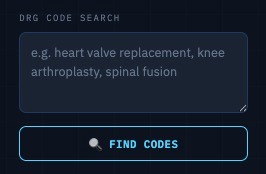
1. Enter a term to find DRG codes related to your device
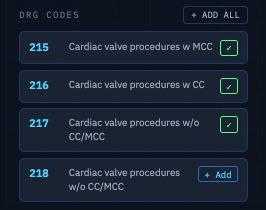
2. Select the corresponding codes, or “Add All”
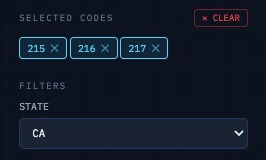
3. Filter by State, or “All States” for all of USA
4. Hit “Run Query”

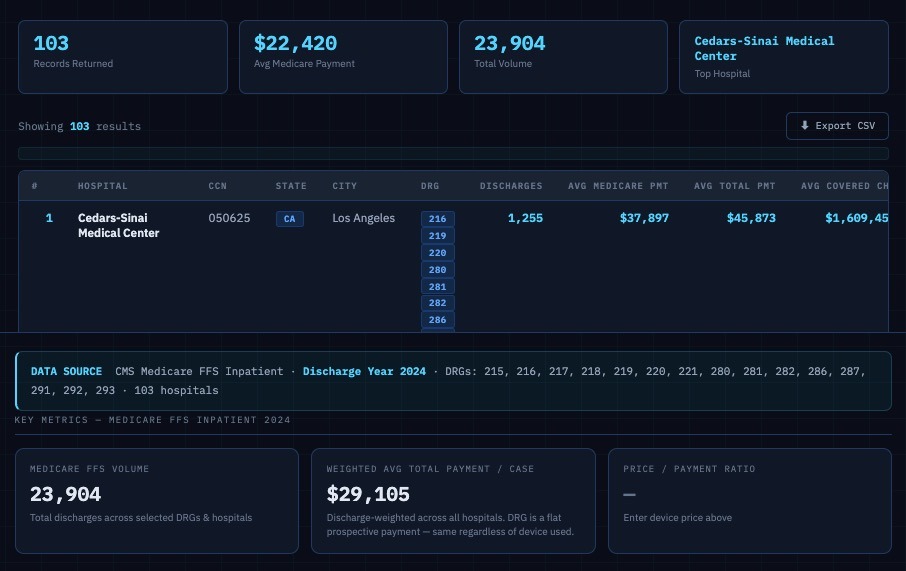
5. Results for cases matching your DRG codes and geography:
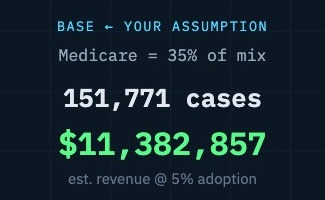
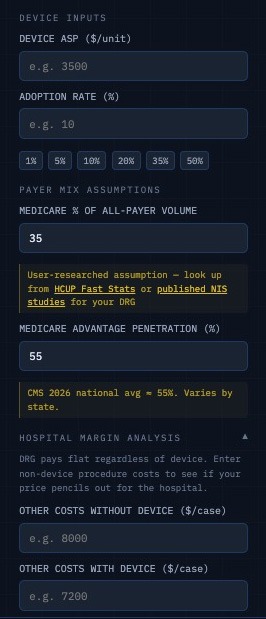
6. Now use the calculator area
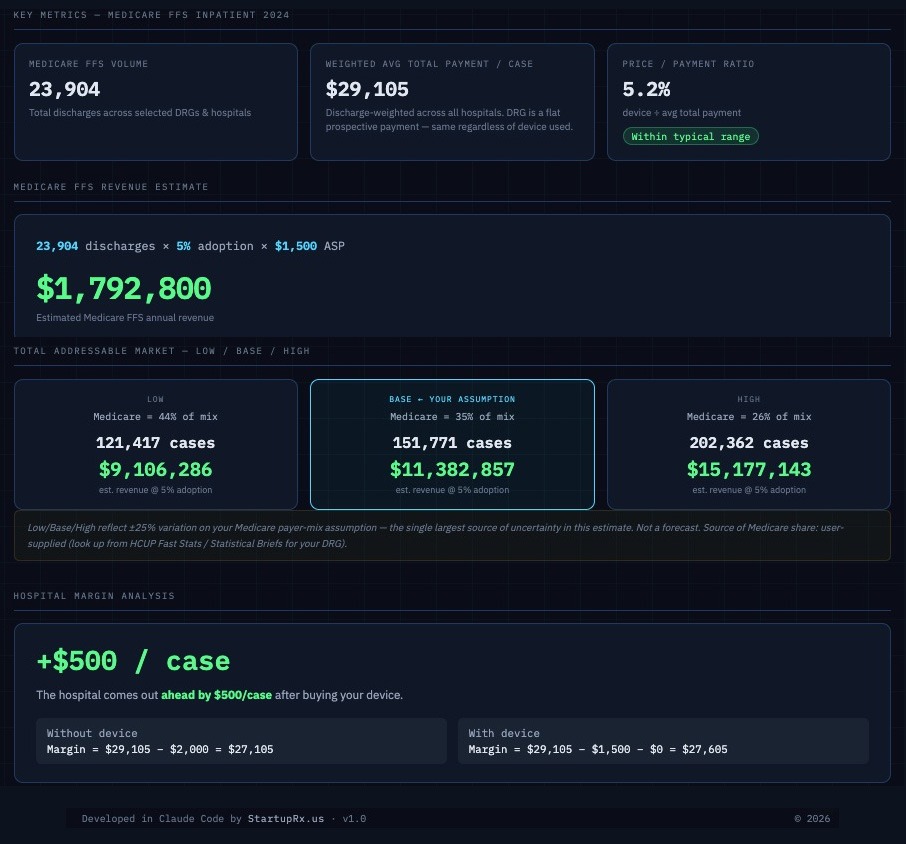
7. The results will update automatically
Medical Device Market Size Overview: Medical TAM Explorer Overview
Medical Device Market Size Calculator Tool: Medical TAM Explorer
About the Medical Device Market Size Calculator
(Written within Claude Code — written from the AI development angle, technically honest, and suitable for an About section or a standalone page. Time: 20 secs)
Note this write-up mentions a couple more tools used in the original Data Explorer which includes:
Built with Claude Code: AI-Native Development in Practice
Medical TAM Explorer was built entirely through Claude Code — Anthropic’s agentic AI coding environment — without a traditional development team. The entire application, from data architecture to UI, was developed through a conversational engineering process in which requirements were discussed, refined, and implemented iteratively in the same session.
How it works technically
The tool is a single-page HTML/JavaScript application with no frontend framework dependencies. It connects directly to two live data sources via public REST APIs:
- CMS data.gov API (
data.cms.gov/data-api/v1) — the primary engine. The app queries CMS’s “Medicare Inpatient Hospitals by Provider and Service” dataset, which contains Medicare Fee-for-Service discharge volumes and payment data aggregated by hospital and DRG code. Rather than hardcoding dataset UUIDs, the app dynamically resolves them from the CMS data catalog (data.cms.gov/data.json) on each session, so it stays current as CMS updates its catalog. - ClinicalTrials.gov API v2 (
clinicaltrials.gov/api/v2) — queried directly for clinical trial data. - A lightweight PHP proxy handles AI-powered code lookups and summaries, routing requests to Claude’s API server-side to avoid exposing keys in the browser.
The DRG code search feature uses Claude via the proxy to interpret natural-language clinical descriptions (e.g., “knee replacement”) and return the relevant DRG codes — bridging the gap between how device teams think about procedures and how CMS codes them.
The AI development advantage
What would typically require a team — a backend engineer to navigate CMS’s API quirks, a frontend developer for the UI, a data analyst to validate the payment methodology, and a healthcare economist to design the TAM model — was accomplished in a single conversational workflow.
Claude Code understood the domain. When the correct weighted-average payment formula was discussed (Σ(discharges_i × payment_i) / Σ discharges_i), it implemented it correctly and fixed a pre-existing averaging bug in the same pass. When the tool’s scope was debated — why CPT/HCPCS codes can’t substitute for DRG data in the inpatient setting, why HCUP has no public API, why the payer-mix multiplier must be a user input rather than a calculated field — the AI contributed to those architectural decisions, not just the code.
MCP plugins
The development session used Model Context Protocol (MCP) plugins that gave Claude Code live access to external data sources mid-session: the CMS Coverage API, the NPPES NPI Registry, and ClinicalTrials.gov. This meant API behavior could be tested and validated in real time during development — not from documentation alone — which dramatically reduced the gap between “what the API is supposed to do” and “what it actually returns.”
Speed and tradeoffs
A working, data-connected TAM calculator with a styled interface, sticky split-pane layout, and production-ready edge-case handling was built in hours rather than weeks. The tradeoff is maintenance: as CMS updates dataset titles or field names, the app will need updates — and those updates are most efficiently made the same way the tool was built, in conversation with the AI that understands its own implementation.
Medical Device Market Size Overview: Medical TAM Explorer Overview
Medical Device Market Size Calculator Tool: Medical TAM Explorer